About
The Science Spotlight on Undergraduate Research showcases the diversity and excellence of research happening across our Faculty, as well as the people who are doing it. This includes research that ranges from course-based group projects to directed studies research to volunteering or working in a lab or even published research articles. Projects are also displayed on screens in select Science buildings. Find more information on how and when to submit.
View past projects from 2024/2025.
2025/26 research projects
Citizen Science: The Hong Kong Jellyfish Project (HKJP) by Ashley Lau
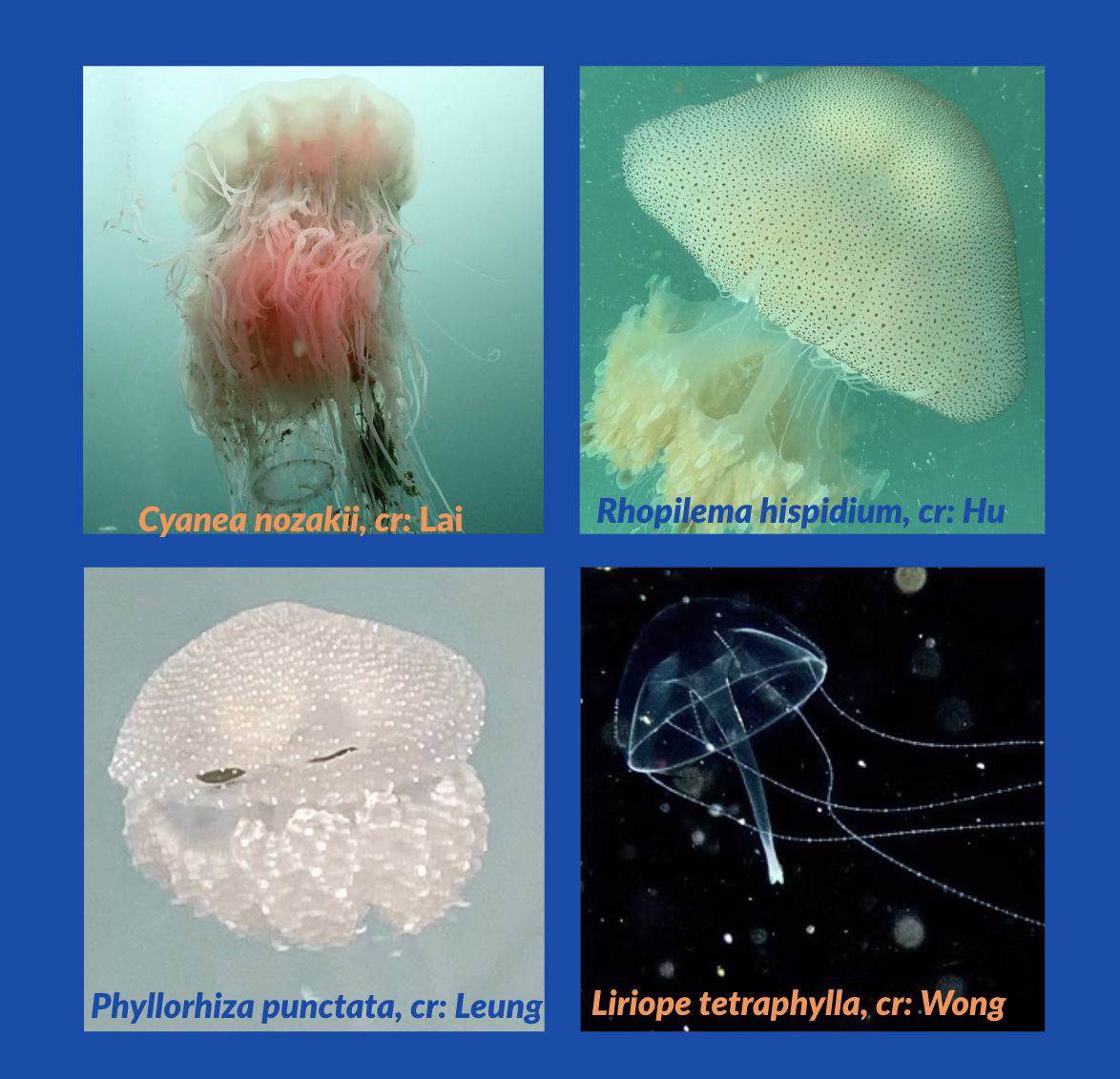
The Hong Kong Jellyfish Project (HKJP) studies the distribution and seasonality of jellyfish. I curated species data in 2024, including nine new species recorded in Hong Kong for the first time. I also learned to identify and organize records in Darwin Core standards, translate, and deliver science communication materials effectively.
Project details: Hong Kong Jellyfish Project

I am interested in the intersection between research and science communication, as well as citizen science to promote participation in data collection and research to people in all walks of life.
Assessing Working Memory in Northern Fur Seals by Jaanasheen Bala

Our experiment aims to quantify working memory thresholds in northern fur seals (Callorhinus ursinus) using a visual discrimination task.
Affiliated Lab: Marine Mammal Research Unit

I am a fourth year student majoring in Neuroscience and Biological Oceanography. My research interests include combining these two disciplines to understand marine organism behaviours and their underlying mechanisms.
Characterizing Substance Use Patterns in 2SLGBTQIA+ Patients by Chris Huh

My research aims to improve detox care for 2SLGBTQIA+ patients at St. Paul’s Hospital by using the Road to Recovery model to examine factors uniquely impacting this community.

I’m a third year Integrated Sciences student specializing in Neurophysiology. I’m interested in research in psychiatry and social medicine, particularly focusing on mental disorders and the key biological, psychological, and social factors that influence their development and outcomes.
Syncopation: Rethinking Rhythmic Complexity in Time by CC Liang and Wendi Ke

We challenged the traditional syncopation model and revealed that timing between syncopated events outweighs beat weights in predicting perceived complexity. This opens a new avenue for manipulating complexity.
Affiliated Lab: VanLab

CC (on the left): I’m a fourth year student in the Bachelor plus Master of Management program, majoring in Cognitive Systems and minoring in Music. My research interests lie at the intersection of music theory and psychophysics, studying music perception through an interdisciplinary lens.
Wendi (on the right): I’m a third year student majoring in Computer Science and Statistics. I’m interested in statistical modeling and how computational methods can be applied to practical and interdisciplinary problems.
MRI to monitor lung function in people with CF starting CFTR modulator by Amreen Kaur Aulakh

This project is part of a two-year observational study using advanced MRI and breathing tests to monitor lung health in people with cystic fibrosis to start a new drug treatment. During my co-op, I contributed to patient recruitment and data collection to show these tools are more sensitive in detecting lung changes compared to traditional tests.

I am a senior Biology student involved in research at the Centre for AgingSMART at VGH to continue my interest in clinical research and pediatric medicine. Outside of research, I am a powerlifter and work as a personal trainer passionate about helping others reach their goals.
When the Air Turns Hostile: Cellular Effects of Pollen and Wildfire Smoke by Charlotte Lee

I examined how climate-driven wildfire smoke and pollen exposures affect human airway cells. This project highlighted the importance of co-exposure models in research.
Affiliated Lab: Air Pollution Exposure Lab

I’m a fourth year Microbiology and Immunology student from Langley. I have a strong interest in human genomics, climate change, and examining the effects of climate-driven environmental changes on our overall health. Outside of school, I love to bake, play music, run, and de-stress with cozy games!
Colour Normalization of Hyperspectral Scanned H&E Stained Tissue in Preparation for AI Segmentation by Jasmine Rehal
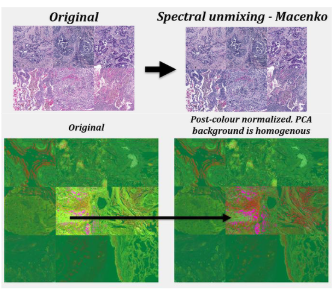
With a hybrid Spectral Unmixing-Macenko framework, 16 wavelength data across 100 normal tissue Regions of Interest (ROI’s) are normalized to one reference. Concentration is derived from generalized pure spectra and normalized. The differences in spectral information not captured by the two H&E stain vectors are preserved and added to the image constructed with the normalized concentrations. This improves interpretation of principal component analysis and AI segmentation, enhances discernment between nuclei and tissue, and enables more robust analysis of lung cancer histology across hyperspectral datasets.
Affiliated Lab: Dr. Calum MacAulay Lab

I am a third year student in a combined honours biophysics specialization. While research has been a part of me growing up, my journey with cancer research became much more personal two years ago. I was diagnosed with DLBCL (Diffuse Large B-Cell Lymphoma), a fast-growing blood cancer that grew solid tumours in my chest and pancreas. Four months into chemotherapy, the cancer passed the CNS barrier into my brain. With my co-op research at the BC Cancer Research Institute, I feel fulfilled to know that my patient experience is being translated into meaningful cancer research.
The role of UNC-51 in synapse formation in C. elegans by Yvonne Wu

This research employs the split-Green Fluorescent Protein (GFP) system, genetic crosses, and confocal fluorescence imaging to investigate the function of UNC-51 in synapse formation. I have found that UNC-51 is enriched with presynaptic specializations.
Affiliated Lab: The Mizumoto Lab

I am a third year Neuroscience student and I am interested in neurodevelopment at the molecular level. My research focuses particularly on synapse formation and regulation. I enjoy working in wet labs and I am excited to learn new lab techniques.
Variability of the Neck-Shaft Angle of the Femur and Its Implications by Daniel Zhang

This project seeks to understand the demographic anatomical variability through collecting cadaver data to corroborate orthopedic diagnosis. In the Gross Anatomy Lab, I learned how to maintain consistency in measuring human specimen.
Affiliated Lab: UBC Gross Anatomy Lab

I am in my fifth year of pursuing a dual degree in Biology and Piano performance. I grew up in Richmond, and I have been drawn towards learning about the human body and its mechanisms for life. I aspire for a career that can contribute to helping people sustain purposeful living.
Interpreting Language Model Latent Space using Linguistics by Melvin Teo

This project uncovered the “black box” internal mechanisms of large language models (LLMs) using linguistics data about the vocabulary. I learned more about how large language models process and generate text under the hood.
Affiliated Lab: UBC Computational Linguistics Lab

I’m a fifth year Computer Science student passionate about exploring the intersection between artificial intelligence and linguistics. I grew up in Vancouver with an interest in programming and technology.
Morphological Development of Female Glandular Trichomes (Cannabis sativa L.) Across Flowering Stages by Christa Agoawike

Using multiphoton (confocal microscopy), I developed a morphometric staging criterion to help distinguish developmental stages of individual trichomes on cannabis plant tissue.
Affiliated Lab: The Samuels Lab

I’m a graduating Biology and Oceanography undergraduate with an interest in cell science and microscopy work. I enjoy reading outside of my research.
Network Function Caching Using Programmable Switches by Anmol Ghadia

This project involved designing a cache in the data-plane of a programmable switch to optimize network function processing in datacenters, exploring the challenges of offloading complex logic onto resource-constrained hardware while preserving correctness.
Affiliated Lab: Systopia

I am a fourth year Computer Science Honours student. I am interested in learning about large scale systems with focus on security and privacy.
Hypoxia's Effects on the Metabolic Activity of Stickleback by Maria Cheema

Three-spined sticklebacks were acclimated in low-oxygen tanks for two weeks. Their organs were dissected, and I performed enzymatic assays to assess metabolic activity changes.
Affiliated Lab: Dr. Jeffrey Richards's Lab

I am a fourth year Biology student from Surrey with a minor in Asian Studies. My research interests include animal physiology, plant genomics, and advancing clinical care. In my free time, I enjoy making art, playing volleyball, and immersing myself in fandoms and music.
Classification of Glioblastoma with Machine Learning Models by Tai Belke

In this project, I explored how we can use machine learning models to diagnose Glioblastomata, a highly aggressive brain cancer. A workflow was created that can quickly generate a baseline accuracy prediction on new Glioblastomata datasets and serve as the base for future models.
Affiliated Lab: Michael Smith Laboratories

I’m a third year student in Statistics. I am interested in applying statistical and computational methods to a wide array of subjects such as bioinformatics and digital humanities.
Specula: Synthesizing Formal Specs From Systems Code by Emilie Ma
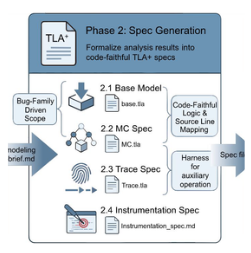
We used large language model (LLM) coding agents to automatically generate system specs. These agents find serious software bugs but take significant human effort to write. Our research helps scale verification techniques to wider adoption.
Affiliated Lab: Systopia

I'm a Computer Science Honours student and I've been involved in research since my second year. I'm interested in how we can ensure critical software is safe and secure.
Investigating Nucleolar Markers of Aggressive Prostate Cancer by Sarina Saffarian

We investigated how nucleolar proteins NPM1 and FBL are linked to prostate cancer aggressiveness using patient specimens and complementary cell-based studies. I learned more about collaborative experimental design, data interpretation, and scientific communication.
Affiliated Lab: Somasekharan Lab
Publication: Link

I am a fifth year undergraduate student majoring in Biology interested in research that seeks to understand the biological mechanisms underlying health and disease, with the goal of informing therapeutic development. Outside of academics, I enjoy learning the guitar, exploring creative interests, and spending time in nature.
Improving Collaborative Research with Business and STEM Models by Emma James and Nichola Ngiam

By incorporating business and STEM group models in undergraduate research labs, we examined how different approaches in collaborative frameworks and dynamics within research teams shaped student teamwork and learning outcomes.
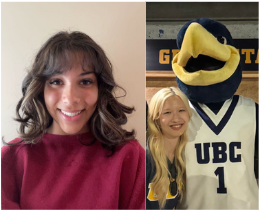
We are both in our final year of the Biology program, with a shared research focus on pedagogical approaches in science. We both grew up in major Canadian cities, Calgary and Vancouver, and we draw on diverse local contexts to enhance collaboration in science undergraduate education.
Investigating the Effects of Exercise on Metabolic Disease by Kiana Pashaoskooie

Through exercise cessation studies on mouse models, we evaluate the therapeutic potential of exercise in protecting against hyperinsulinemia and other metabolic defects common to Type 2 Diabetes.
Affiliated Lab: J. Johnson Lab
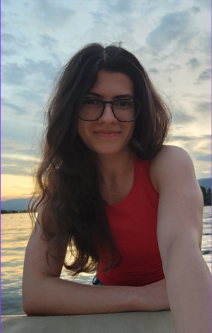
I’m a fourth year honours student in Biology. I’m incredibly passionate about exercise physiology research and love learning about how moving our bodies can lead to lasting, beneficial physiological change. In my free time you can find me outside enjoying the sun!
A Scalable Framework for Multi-Policy AI Compliance by Trie Yu Yang

I built PASTA, a tool that helps AI practitioners check whether AI systems comply with global policies in just under two minutes with strong alignment with human legal experts.
Affiliated Lab: SOCIUS Lab
Publication: Link

I am a third year Computer Science student at SOCIUS Lab. My interests lie in human-centered AI, human-robot interaction, bridging the gap between technology and people, with an emphasis on usability, clarity, and impact.
Raman Spectroscopy and Machine Learning Measure Mineral Carbon Capture by Serena Chin

This project presents the fast, non-destructive measurement of total inorganic carbon using only spectral information. This will quickly validate new mineral carbon capture methods, accelerating its development.
Affiliated Lab: Grant Research Group

I’m a second year Chemistry and Mathematics student from BC. My research interests lie in optical microscopy and Raman spectroscopy for nano- and microplastic detection, quantification, classification, and mineral measurement.
The Hidden Cost of Intelligence: Uncovering the Energy, Emissions, and Infrastructure Behind AI by Ananyaa Chopra

Artificial intelligence often feels invisible, but behind every model is energy, infrastructure, and environmental costs. My research makes these costs visible by investigating how design choices scale into global impact, and developing tools to improve energy awareness in computing education.

I’m a third year Computer Science student, Data Science Teaching Assistant, and a leader in Women in Computer Science. My research uses technical skills not just to build systems, but to question their impact. I grew up in India which shapes how I think about access, opportunity, and responsibility in computing.
Patient Perspective on AI in Healthcare by Shawn Asadian
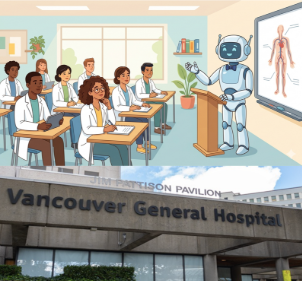
Using a rigorous Machine Learning-assisted review pipeline, I conducted a scoping review of 144 studies across 24 countries and found that patient trust in AI-trained physicians is fragile, conditional, and central to the responsible integration of AI into medical education.
Affiliated Lab: mHealth Research Group

I’m a third year Integrated Sciences student fascinated by the human side of technology in medicine. As AI reshapes how doctors are trained, I wanted to know: are we listening to the patients who’ll be affected most? I strive to design AI systems that make medical education and healthcare more equitable across diverse populations.
Minor edits may have been made to responses for grammar or clarity.