News
-
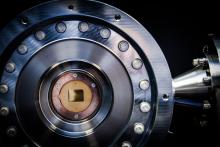
New state of matter could make quantum computers less error-prone
July 20, 2022
A new phase of matter that could be protective against a range of errors in quantum computation has been demonstrated by researchers at the University of British Columbia (UBC), quantum computing company Quantinuum, and New York’s Flatiron Institute. The research, published today in Nature,… read more
-
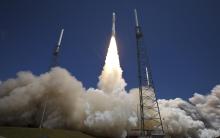
Space rocket junk could have deadly consequences unless governments act
July 12, 2022
The re-entry of abandoned stages of rockets left in orbit from space launches have a six to 10 per cent chance of severely injuring or killing a human being in the next decade, according to a new UBC study. While the risk to any single individual is very low, the researchers say governments need… read more
-

Leadership transitions at IRES, Botany and MSL
July 5, 2022
UBC Science is pleased to announce the appointment of new heads and directors at the Department of Botany, Institute for Resources, Environment and Sustainability, and Michael Smith Laboratories. All the appointments take effect July 1, 2022. Epigeneticist Dr. Martin Hirst is the new director of… read more
-
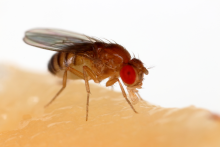
How flies lay off the extra salty snacks
June 29, 2022
Fruit flies are known for their sweet tooth, but new research also indicates they may offer hints to how animals sense—and avoid—high concentrations of salt. Using mutant fruit flies, University of British Columbia zoologists have identified a new high-salt receptor on the tongue of… read more
-
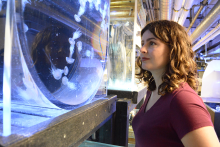
This scientist is taking an international jellyfish tour to explore mucus and medusae
June 28, 2022
From some of the largest jellyfish in the world in Japan to the tiny venomous Irukandji in Australia, UBC doctoral student Jessica Schaub is about to set off on an international tour of jellyfish. A doctoral student in the department of earth, ocean and atmospheric sciences and the Institute for… read more
-
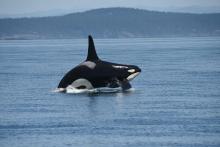
Southern resident killer whales not getting enough to eat since 2018
June 27, 2022
The endangered southern resident killer whale population isn’t getting enough to eat, and hasn’t been since 2018, a new UBC study has determined. The animals have been in an energy deficit, averaged across spring, summer and fall, for six of the last 40 years—meaning the… read more
-
$13 million in support bolsters computational, physical science research at UBC
June 23, 2022
Sixty-one UBC Science faculty members have received a total of $13.6 million in Natural Sciences and Engineering Research Council of Canada (NSERC) Discovery Grants. The funding is part of 137 new projects led by UBC researchers receiving a total of $28 million in funding announced today. … read more
-

Storytellers want AI writers to respect their personal values and writing strategies
June 15, 2022
Is it possible for AI tools to match what professional human writers can do on their own? Just as importantly, are storytellers even open to human AI-co-writing? That’s what UBC computer science researchers explored in a qualitative study unveiled at the Designing Interactive Systems 2022… read more
-
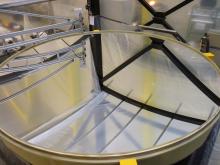
Indian, UBC astronomers celebrate first light at liquid-mirror telescope
June 8, 2022
Telescope locations are often remote, but Dr. Paul Hickson’s work on the newly commissioned International Liquid Mirror Telescope (ILMT) in the central Himalayas involved quite an impressive trek. “Going there was a bit of an adventure,” admits Dr. Hickson, a pioneer in liquid… read more
-

Scientists urge WTO to ban subsidies that promote overfishing
June 6, 2022
Scientists are calling on the World Trade Organization (WTO) to ban subsidies that can cause overfishing at its meeting next week. The organization’s topmost decision-making body is meeting next week, June 12 to 15, and almost 500 scientists have urged it take steps to protect fish stocks… read more