News
-

UBC expands first-year, small-class experience to all BSc students
June 17, 2024
A renewed and expanded first-year seminar will give all incoming UBC Science students a crucial small class experience—one that will challenge them to think critically about what it means to be part of the scientific community.“SCIE 113 is unlike any other first-year experience available at UBC,”… read more
-

Computational sciences research at UBC gets Discovery Grant, CRC boost
June 14, 2024
Computer visualization, quantum computing, advanced mathematics and statistical models for conservation efforts are among the research areas being funded at UBC Science as part of the latest round of NSERC Discovery Grant investments.The new Discovery Grant funding announced today will support… read more
-

Basic income could solve global poverty and stop environmental destruction, study finds
June 7, 2024
Providing a basic income could boost global gross domestic product (GDP) by $US163 trillion while acting to curb environmental degradation, UBC research has found.An analysis of 186 countries found that providing basic income, or regular, set payments to all adults in the world, could boost global… read more
-

Hummingbirds have feelings too: an acute sense of touch that could help them hover
May 29, 2024
New research mapping a hummingbirds’ sense of touch onto specific areas of the brain shows the little creatures are sensitive to even slight puffs of air.The study, published today in Current Biology, could help show just how hummingbirds perform their signature hover near the flowers they… read more
-
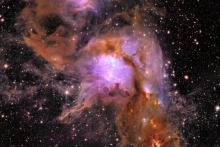
Euclid serves up first science with a side of stellar images
May 23, 2024
Five new images of the universe taken by the Euclid satellite are now available, along with the mission’s first scientific papers and data. The never-before-seen images demonstrate the European Space Agency (ESA) satellite’s ability to unravel the secrets of the cosmos and enable scientists to… read more
-
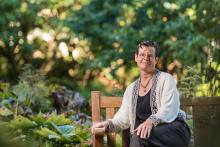
UBC zoologist named fellow of the Royal Society UK
May 16, 2024
Dr. Sally Otto—a theoretical biologist focused on fundamental questions of population genetics and evolution—has been elected to the Fellowship of the United Kingdom’s Royal Society. She joins 12 other UBC Science fellows elected to the society over the past decades.A highly acclaimed scientist, Dr… read more
-

Quantum geometry offers new insights into ‘smart’ materials with switchable electric polarity
May 14, 2024
Quantum theorists at the University of British Columbia have proposed a new approach to studying stacking ferroelectricity—spontaneous electric polarization—in layered, two-dimensional lab-grown materials.Ferroelectric materials are unique in their ability to “remember” their new state after the… read more
-

AI can tell if a patient battling cancer needs mental health support
May 2, 2024
Psychiatrists and computer scientists at UBC and BC Cancer have developed a new artificial intelligence (AI) model that can accurately predict if a person receiving cancer care will require mental health services during treatment.The AI uses natural language processing and advanced neural networks… read more
-
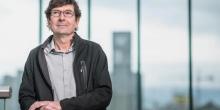
UBC evolutionary biologist Dr. Dolph Schluter named AAAS Fellow
April 18, 2024
Internationally renowned evolutionary biologist Dr. Dolph Schluter has been elected to the newest class of American Association for the Advancement of Science (AAAS) fellows, among the most distinct honours within the global scientific community. AAAS, the world’s largest general… read more
-

How art can help us talk about the green transition
April 16, 2024
Elders, researchers and musicians are using art to get people talking about the challenges and opportunities of a transition to renewable energy. The Heavy Metal Suite concert premiers on Earth Day, featuring individual musical movements inspired by the critical elements needed for the green… read more